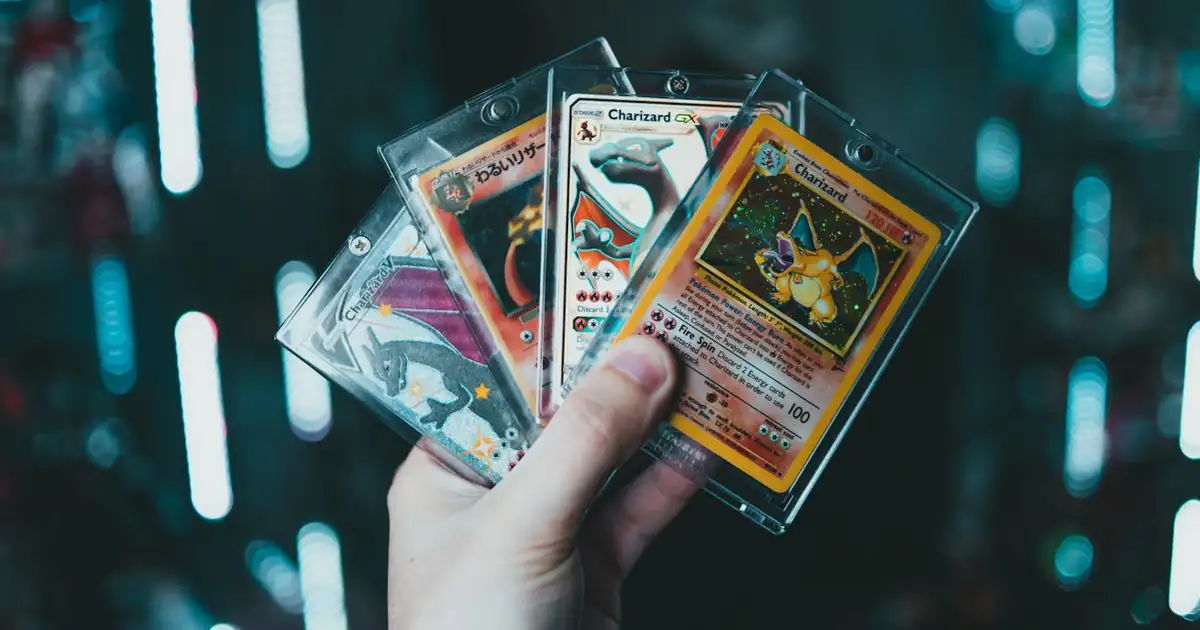
Grading a Pokémon card costs money and weeks of waiting. Run this 5-point checklist before you submit anything, so you only pay to grade cards that clear.
The question "is my Pokémon card worth grading?" almost always gets answered backwards. People decide they want a card slabbed, send it in, and find out two months later whether it was a good idea. By then the fee is spent.
Do it the other way around. Before a Pokémon card goes anywhere near a grader, it has to pass a few checks — on the card itself and on the math. This is that checklist. Run it on any card you're tempted to submit, and you'll stop paying to grade cards that were never going to pay you back.
First, the math that decides everything
Grading isn't free and it isn't fast. As of mid-2026, PSA had paused its cheapest "Value" tiers entirely to dig out of a backlog that was approaching ten million cards, which pushed the practical entry point to its Regular tier at roughly $80 a card, with turnaround stretched into the 40–50 business day range. CGC and Beckett have cheaper active tiers — CGC's Economy and Beckett's standard service run closer to $18–25 — but every one of them adds shipping both ways and weeks of your time. Confirm current pricing on PSA, CGC, or Beckett before you commit, because these tiers and waitlists move around.
So here's the rule the whole decision hangs on: a card is only worth grading if its likely graded value clears the raw value plus every cost above, with room left over. The rough heuristic most collectors use is the 3x rule — the PSA 10 price should be at least three times the raw Near Mint price. That multiplier isn't arbitrary. It covers the fee, the risk of getting a 9 instead of a 10, and the simple fact that a slab is harder to sell than a raw card. If a card can't clear 3x, the rest of this checklist doesn't matter. Sell it raw.
The is PSA grading worth it breakdown goes deeper on the economics. Everything below assumes your card already clears the math and you're now asking whether it can actually grade well.
1. Centering
Centering is the factor that quietly caps the most grades, and it's the easiest one to check yourself. Look at the border on all four sides, front and back. A card can look perfect head-on and still be 65/35 off — and the back counts too, often more than people expect.
Hold a ruler to it or measure the borders against each other. A card that's roughly 55/45 or better front and back has a real shot at a high grade. Push past 60/40 and you're usually capping out at a 9, sometimes lower, no matter how clean everything else is. On a card where only the 10 makes the money work, centering alone can end the conversation.
2. Surface
Tilt the card under a light and move it around. You're hunting for scratches, print lines, indentations, holo scuffing, and the dreaded fingerprint that won't wipe off. Modern holo and full-art Pokémon cards are especially prone to surface scratches that are invisible straight-on and obvious at an angle.
This is the check people fail most, because a card feels mint in the hand right up until the light catches a hairline you didn't know was there. Whitening on the back — those little frayed edges — shows up here too. If the surface is clean under raking light, you've cleared the hardest gate.
3. Corners
Look at each corner under magnification or at least good light. Sharp and tight, or soft and slightly white? Corners take damage from being shuffled, stacked, and pulled in and out of sleeves, and a single fuzzy corner drops a grade fast.
This is binary in a useful way: a corner is either clean or it isn't, and you can usually tell. If three corners are crisp and one is soft, that soft one is your ceiling.
4. Edges
Run a fingernail very lightly along each edge and look for nicks, whitening, or rough cuts. Edge whitening is common on darker-bordered cards because any wear shows against the ink. It's also easy to miss because we don't instinctively inspect edges the way we check corners.

A clean edge won't win you a grade on its own, but a chipped one will absolutely cost you. Combined with corners, this is where ordinary handling wear announces itself.
5. Rarity and demand
Here's the check people skip, and it's the one that separates "gradeable" from "worth grading." A card can be flawless and still be a waste of a submission if nobody's paying a premium for the slabbed version.
A common from a modern set in a PSA 10 is often worth less than the fee you paid. The cards that justify grading are the ones with real slabbed-market demand: chase rares, sought-after illustration rares, iconic characters, vintage holos. If you're not sure where your card sits, the Pokémon rarity symbols guide helps you read what you've actually got, and recent sold listings tell you whether buyers want it graded at all. Flawless and unwanted is still unwanted.
When not to grade
Some cards are easy nos no matter how clean they look:
- Commons and bulk rares, even from beloved sets — the PSA 10 doesn't clear the fee.
- Anything below Near Mint. Visible wear means no 10, and a 7 or 8 rarely carries enough premium to justify the cost.
- Cards you actually play with. Don't slab a card that's going in a deck.
- Cards with obvious centering or surface problems you already spotted above. You're not going to luck into a 10.
The most expensive grading mistake is submitting a card that comes back a 7. You paid the fee and the shipping to confirm the card was worth less than its raw price the whole time. The checklist exists to catch exactly that before it costs you.
Check the card before you pay to check the card
The honest catch with self-inspection is that your eye is optimistic, your lighting is inconsistent, and you want the card to be a 10. That's where a scan helps. Scryda photographs the card and scores those same four physical factors — centering, surface, corners, edges — into a PSA-equivalent estimate, and attaches the card's current market value so you can run the 3x math in the same breath. It won't catch everything a grader sees under controlled lighting, especially fine surface scratches, but it'll flag the centering you measured wrong and the obvious problems you'd rather not see.
Use it as a screen, not a verdict. Cards it reads as a likely 9 or 10 that also clear the money math are your submission pile. Everything else sells raw. If you want to compare which grader fits your specific card, the CGC vs PSA vs Beckett comparison covers who's best for what.
Download Scryda free, scan the cards you're tempted to grade first, and let the estimate and the price talk you out of the bad submissions before the fee does.
Frequently asked questions
How much does it cost to grade a Pokémon card in 2026? It depends on the grader and tier, and the numbers move. In mid-2026, PSA had paused its cheapest "Value" tiers because of a backlog, pushing its entry point to roughly $80 per card at the Regular tier, while CGC's Economy and Beckett's standard service ran closer to $18–25. Add shipping both ways and weeks of turnaround. Check each grader's site for current pricing before submitting.
What's the 3x rule for grading? A rough heuristic: only grade a card if its PSA 10 value is at least three times the raw Near Mint price. The multiplier covers the fee, the risk of getting a 9 instead of a 10, and the fact that slabbed cards are harder to sell than raw ones.
What's the most common reason a card doesn't get a 10? Centering, usually, followed by surface scratches. Centering caps more grades than anything because it's measured on both the front and the back, and a card can look perfect head-on while being well off-center.
Can an app tell me if my card is worth grading? It can estimate the grade and pull the market value, which is exactly what you need to decide. Scryda scores surface, centering, corners, and edges from a photo and shows the current price, so you can screen out cards that won't clear the fee. It's a screening tool, not a replacement for the grader's verdict.
Share this article
Look up what a card is worth
Every set, every card, with the market price on each one — free and no sign-up.
Related articles