Opening Pokémon booster boxes is almost always worse value than buying singles. Here's when the math works and when it doesn't.
Here's a fact that's worth sitting with: the expected value of the cards inside a modern Pokémon booster box is almost always less than what you paid for the box. Sometimes significantly less. The Pokémon Company has engineered it that way — they're not in the business of giving away more value than they charge for.
So when does opening boxes make sense? And when should you just buy the specific Pokémon cards you want directly?
The math on booster boxes
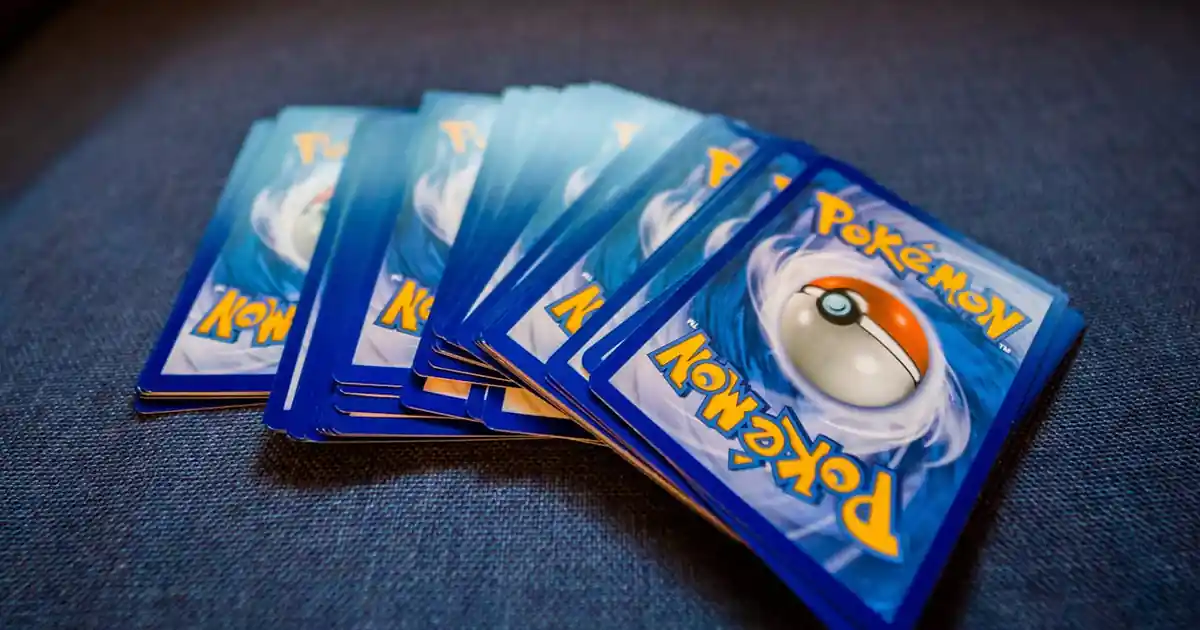
A standard modern Pokémon booster box contains 36 packs with 10 cards each. Each pack has a guaranteed reverse holo and a guaranteed rare or better. The distribution of pull rates — how often you hit various rare tiers — is published by The Pokémon Company and tracked in aggregate by the community.
For a typical Scarlet & Violet era set, the average expected value of a $160 box is somewhere in the $90–120 range, calculated against current market prices. You pay $160, you get cards worth roughly $90–120 on average. Some people open above that, some below — it averages out to a loss.
The specific numbers change with every set and every market movement, but the direction doesn't change. Opening boxes is expected negative EV unless you open an unusually valuable pack. Check TCGPlayer's set page or community tracking sites before opening anything expensive.
When buying singles is clearly better
If you have a specific list of cards you want — for a deck, for completing a set, for a specific collection goal — buying singles wins every time. You get exactly what you want, you pay a fair market price for it, and you don't generate 300 cards you don't need.
The Scarlet & Violet price guide lists the cards actually worth pulling from recent sets. Most of the valuable pulls are concentrated in a handful of special illustration rares and gold cards. If you want those specific cards, their individual prices are known quantities. Buying them directly is cheaper on average than pulling them from packs.
TCGPlayer and Cardmarket list individual card prices with recent sales history. If a card you want is $15 and a pack costs $7, the math on pulling it is straightforward.

When opening boxes actually makes sense
There are real reasons to open boxes. They're just mostly not about value.
Opening packs is entertaining in a way that buying singles isn't. The randomness, the anticipation of a pack — that's the product Pokémon is actually selling. If you enjoy opening packs and you budget for it the same way you'd budget for a night out, the entertainment is real even if the financial return isn't.
Sealed product speculation is the other case. If you genuinely believe a set has limited print runs and the sealed market will appreciate, holding sealed boxes can make sense. This has worked for some vintage product and certain special releases (the 151 set, Crown Zenith, some ETBs from the Sword & Shield era). It hasn't worked consistently for standard modern sets, where The Pokémon Company has shown they'll reprint to meet demand.
And if you're building a complete set of a specific expansion — wanting every card, not just the high-value ones — buying a few boxes to get most of the way there and then buying the remaining singles is genuinely the most practical approach.
Pulled a card worth real money — now what?
If you do open boxes and pull something significant, know what you have before you move it. Misidentified or misconditioned cards get sold below their actual value constantly.
Scryda identifies the set, edition, and gives a condition estimate on pulls. Worth running anything you think might be valuable through the scanner before you price it. For anything over $100, the PSA grading guide explains whether a grade submission makes sense — graded copies almost always sell for more, but the submission takes time and has a cost.
The Pokémon Company isn't leaving value on the table
The fundamental reality is that the modern Pokémon booster product is priced to make money for The Pokémon Company, not for the person opening it. That's not a criticism — it's just how it works. The entertainment value is real. The investment case is weak.
Buy singles when you know what you want. Open packs when you want the experience. Those are two different activities with two different purposes, and treating one like the other is where people go wrong.
FAQ
Is it worth buying Pokémon booster boxes to sell the cards? Almost never for modern sets. The average EV of cards in a box is below the box price. Unless you're buying at below-retail pricing or holding sealed long-term, the resale math doesn't work.
Where do I find the expected value of a Pokémon set? The TCG community tracks pull rates and calculates EV for major sets. Check forums like r/PokemonTCG, the TCGPlayer set pages, or sites like PriceCharting for community-sourced EV estimates before opening a box.
Should I buy a booster box or an Elite Trainer Box? An ETB gives you fewer packs but adds sleeves, dice, and accessories. It's not a better deal for pure pack EV — you're paying for the included accessories. If you want the accessories, the ETB is fine. If you just want packs, a booster box gives more for the price.
Share this article
Look up what a card is worth
Every set, every card, with the market price on each one — free and no sign-up.
Related articles