Pokémon EX, GX, V, VMAX, VSTAR and ex Explained
EX, GX, V, VMAX, VSTAR, ex — every powered-up Pokémon card type explained by era, what makes each different, and which to collect.
If you've come back to Pokémon cards after a few years away — or you're trying to make sense of a collection you inherited — the alphabet soup of card types can be genuinely confusing. EX, ex, GX, V, VMAX, VSTAR. They're all "powered-up" Pokémon cards, but they come from different eras, have different rules, and have very different relationships with the secondary market.
Here's every type in order, what makes each one distinct, and what it means for collecting.
Why there are so many types
The Pokémon Company introduces new powered-up card mechanics with every generation of the main Pokémon games. When a new set of games introduces a new battle mechanic — Mega Evolution, Z-Moves, Dynamax, Gigantimax — the card game gets a corresponding new card type. Each era retired the previous one, which is why none of these types coexist in current Standard format.
The shared rule across almost all of them: these cards are more powerful than regular Pokémon and give your opponent extra Prize cards when knocked out. That Prize card trade-off is the core balancing mechanism.
EX cards (original, 2003–2007)
The original EX cards appeared in the EX Ruby & Sapphire set in 2003 and ran through the Diamond & Pearl era. These were the first "special" Pokémon card type — higher HP, stronger attacks, but they gave your opponent two Prize cards when knocked out instead of one.
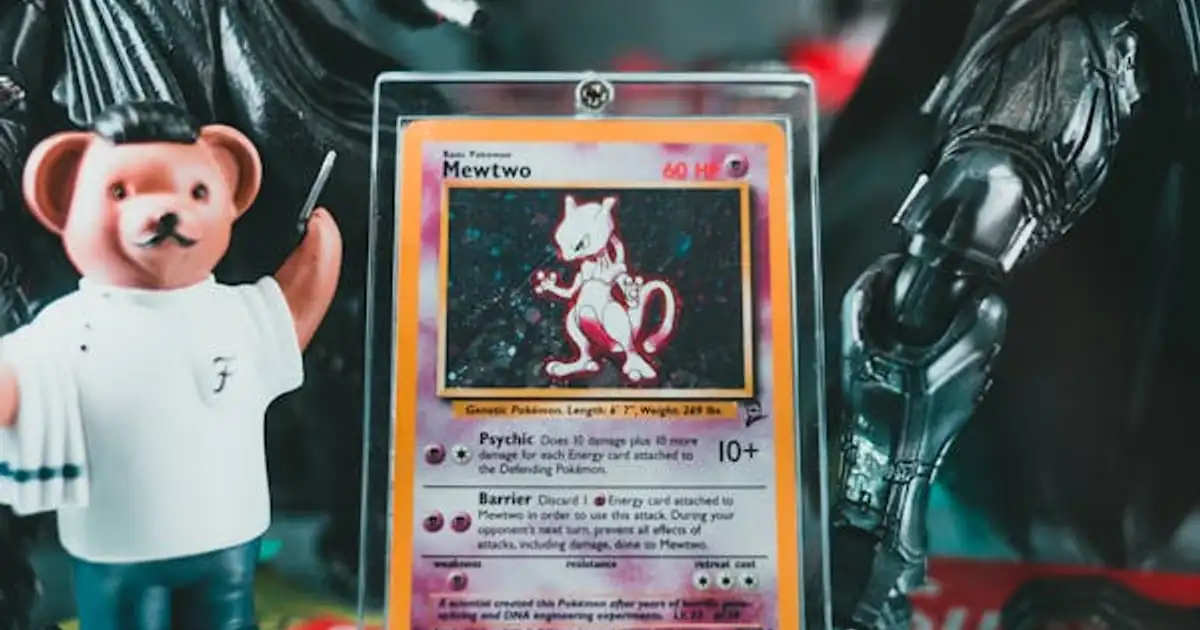
"Ex" stood for "extra" — extra powerful, at extra cost. Original EX cards like Charizard ex from FireRed & LeafGreen and Mewtwo ex from the Expedition set are the vintage collector's targets here. They look different from modern cards — older art style, simpler design, WOTC-era card backs on the earliest ones.
Then the mechanic returned in a different form in the XY era (2013–2016), using the uppercase "EX" branding. XY-era Mega EX cards (Mega Charizard EX, Mega Blastoise EX) are the ones with the black "EX" stamp on the card name and were legal in competitive play through 2018.
GX cards (2017–2019)
GX cards came in with the Sun & Moon era. They introduced the GX attack — a single, often game-changing move each GX Pokémon could perform once per game. Not once per turn. Once per game, full stop. Some GX attacks dealt massive damage. Others healed, drew cards, or disrupted the opponent's hand entirely.
This limitation made GX attacks feel like a special resource rather than just a stat on a card, which made the Sun & Moon era uniquely tactical. Competitively, GX cards defined the format for two years.
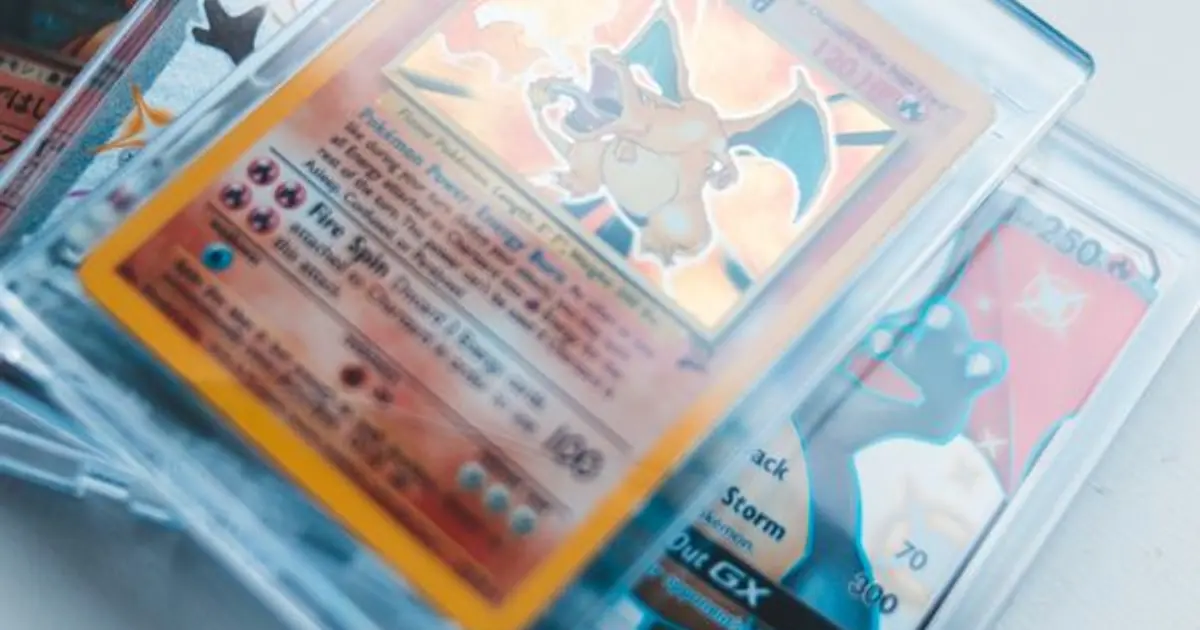
For collectors, Sun & Moon era full-art GX cards are some of the most visually striking cards Pokémon has produced. The Rainbow Rare GX cards — full rainbow foil on every surface — are particularly sought after. Charizard GX, Umbreon GX, and Espeon GX have maintained collector demand well past their competitive relevance.

V cards (2019–2022)
Sword & Shield introduced Pokémon V, and the design philosophy shifted. All V cards are treated as Basic Pokémon regardless of evolution stage — a Dragonite V is a Basic, even though Dragonite normally requires two evolutions to reach. This simplified gameplay significantly.
V cards have 200–230 HP, award 2 Prize cards when knocked out, and form the base from which VMAX and VSTAR cards evolve. On their own they're playable but they're primarily collected as the foundation for the more premium versions.
VMAX cards (2020–2022)
VMAX cards evolve from V cards and represent Dynamax/Gigantamax forms. The defining feature: enormous HP. Most VMAX cards have 300–340 HP — the highest base HP of any card type. That staying power made VMAX central to the Sword & Shield competitive meta.
The catch: when a VMAX is knocked out, your opponent takes 3 Prize cards, not 2. This is the biggest liability in the game. One VMAX knockout can swing a match.
For collectors, the alternate art VMAX cards from the Japanese High Class sets are among the most valuable modern Pokémon cards. Charizard VMAX alternate art from Shining Fates, Umbreon VMAX alternate art from Evolving Skies — these are $60–200+ depending on condition.
VSTAR cards (2022)
VSTAR cards are the other evolution path from V cards, introduced as an alternative to VMAX in the later Sword & Shield sets. They have slightly lower HP (typically 250–280) and — crucially — award only 2 Prize cards when knocked out, not 3.
Each VSTAR card has a VSTAR Power: a one-time-use Ability or attack that can only be activated once per game. More measured than VMAX's raw bulk, but less of a liability. The VSTAR mechanic balanced power and risk better than VMAX for a lot of competitive builds.
ex cards — the current era (2023–present)
The current Scarlet & Violet standard uses lowercase "ex" — intentionally mirroring the original 2003 ex naming while being a distinct mechanic. Modern ex cards are Basic or Evolution (unlike V cards which were always Basic), and they award 2 Prize cards when knocked out.
The artwork is where modern ex pulls ahead of everything before it. Special Illustration Rare ex cards, with their cinematic full-art illustrations, are the most visually detailed cards the game has produced. Charizard ex SIR from Obsidian Flames, Iono SIR from Paldea Evolved — these are the benchmark of what the format looks like in 2026.
Competitively, Mega Evolution ex cards from the 2026 sets (Mega Charizard ex, Mega Mewtwo ex) are the current headline additions. See the Pokémon 2026 sets guide for details on what's releasing this year.
Which era to collect
For pure collector value with a track record: vintage EX cards from 2003–2007 and GX alternate arts from Sun & Moon. Both have established secondary markets and have appreciated over time.
For modern collecting: Special Illustration Rare ex cards from Scarlet & Violet. These are the current chase cards and the ones with the most collector attention right now.
For affordability: V and VSTAR cards are widely available at modest prices. Full-art V cards look great in a collection without the premium of SIR pricing.
Scryda's scanner identifies all these card types including their era and current market value. Check the Pokémon page for full coverage, and the PSA grading guide if you're considering submitting any of the high-value vintage EX or GX cards.
FAQ
What's the difference between EX and ex? They're from different eras. Uppercase EX is from the XY generation (2013–2016). Lowercase ex is the current Scarlet & Violet mechanic (2023–present). They look different, came from different game generations, and are treated as separate card types in rules terms.
Which award the most Prize cards when knocked out? VMAX cards award 3 Prize cards — the most of any type. EX, GX, V, VSTAR, and modern ex cards all award 2. Standard (non-special) Pokémon award 1.
Are GX cards still worth money? Many are, yes. Sun & Moon alternate art and Rainbow Rare GX cards have maintained collector demand well past their competitive retirement. Full-art Charizard GX, Umbreon GX, and Espeon GX are consistently sought after. Check current prices on TCGPlayer or PriceCharting before buying or selling.
Share this article
Look up what a card is worth
Every set, every card, with the market price on each one — free and no sign-up.
Related articles