Yu-Gi-Oh! Cards Worth Money in 2026
Most Yu-Gi-Oh! collections have a few hidden gems. Here's how to find the cards that actually hold value in 2026.
Dig out a binder from 2010 and there's a decent chance something in there is worth more than you'd expect. Yu-Gi-Oh! cards have been passing through hands for over 20 years, and a lot of valuable ones ended up in collections that haven't been touched since.
The problem is that Yu-Gi-Oh! pricing works differently from Pokémon or MTG. Evaluate it with the wrong mental model and you'll either sell too cheap or hold the wrong cards for years.
Why prices move differently here
In Pokémon, value is mostly nostalgia and condition. In MTG, it's format legality and reprint scarcity. In Yu-Gi-Oh!, the main driver is tournament relevance — and the Forbidden & Limited list.
A card that tops a major YCS event can double in price over a single weekend. That same card can crater just as fast when Konami hits it on the next ban list. This makes the market more volatile than most collectors expect. A card that was $30 last year might be $8 now, or $60 — depends entirely on what happened in the last few list updates.
The cards that hold value long-term are either old enough that reprints are unlikely, or so universally useful they've survived multiple format shifts. Everything else is renting, not owning.
Check the current list at Konami's official database before pricing anything competitive for sale.
Cards that actually hold value
Old foils from early limited-print sets are the safest ground. LOB (Legend of Blue Eyes White Dragon), MRD (Metal Raiders), and similar sets from 2002–2004 were printed in much smaller quantities than most people realize. A Secret Rare or Ultra Rare from those sets holds value based on scarcity alone — it doesn't need to be playable. Blue-Eyes White Dragon from LOB, Dark Magician first prints, early-era holofoils — these have a floor that doesn't move much with format changes.
Tournament staples that haven't been heavily reprinted are worth checking too. Ash Blossom & Joyous Spring and Infinite Impermanence have been reprinted into the ground — their prices reflect that. But there are staples Konami has been slow to reprint that still hold $20–60+. Before assuming a card is valuable, check its reprint history on TCGPlayer. A card with six printings is rarely worth what the newest version lists at.
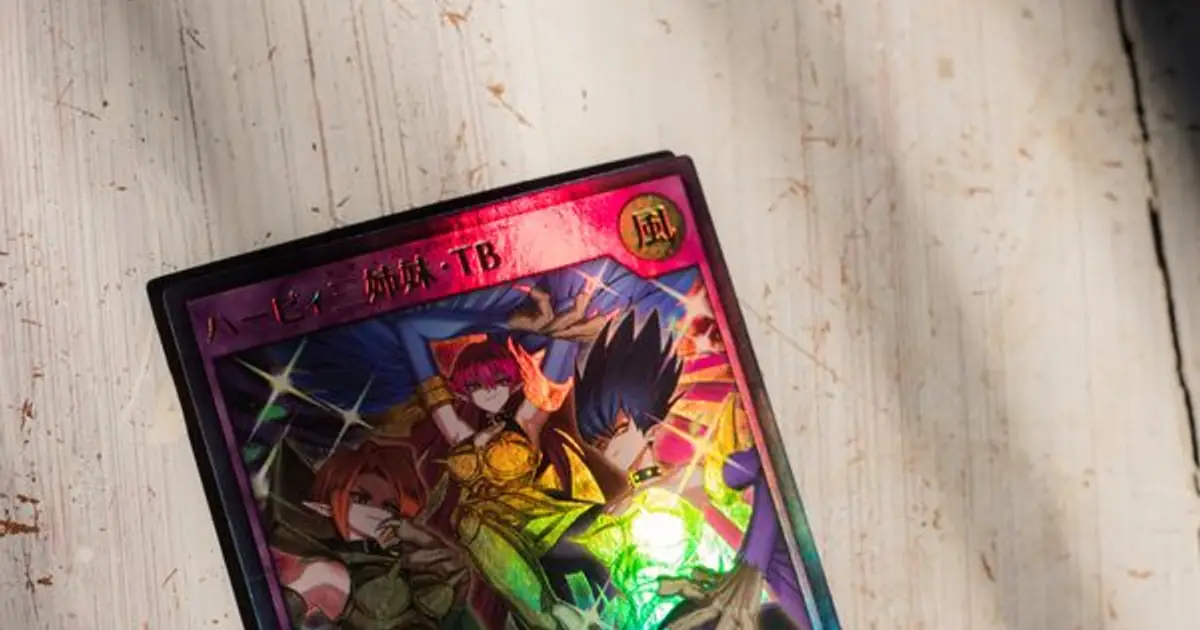
Ghost Rares and Collector's Rares from recent core sets hold up better than most. Konami keeps these treatments scarce, so a Ghost Rare can hold $40–100+ even on a card that's not competitively dominant. If you pulled one and tossed it in a binder, check it.
Use Cardmarket for European price comparisons — there's often a gap worth knowing about if you're selling.
What to sort through first
Pull out everything foil — Secret Rares, Ultra Rares, Ultimate Rares, Ghost Rares. Commons from non-collector sets are almost never worth time.
Then look at the set code on the bottom of each card. Three-letter codes like LOB, MRD, SDK, IOC — anything before 2010 — is worth an individual lookup even if you don't recognize the card.
Check condition honestly. Yu-Gi-Oh! gets played rough, and players often don't sleeve until the card is already scratched. Condition matters less for old collector cards than it does in Pokémon, but it still has a ceiling effect on what you'll get. A Heavily Played LOB Blue-Eyes is still worth real money. A HP modern staple is worth less than you'd hope.
Scanning a large collection
Going through hundreds of Yu-Gi-Oh! cards manually takes a long time. Scryda handles Yu-Gi-Oh! set identification, print edition, and condition estimation — you move through a binder in a fraction of the time it takes to look up cards one by one.
It also pulls current market prices, which matters more here than with most TCGs given how fast things move. A price from three months ago on a competitive staple is probably wrong. Check the Scryda Yu-Gi-Oh! page for full set coverage.
If you find anything worth grading after your scan, the PSA grading guide covers when it actually makes financial sense — short version: not always.
What you'll usually find
Most large Yu-Gi-Oh! collections have value concentrated in a handful of cards. Going through a 500-card binder and finding 480 worth under $1 each is normal. Then you hit five cards worth $15–80 each.
The frustrating part is you don't know which binder holds the $60 Secret Rare until you actually look. At least the looking is faster now.
FAQ
Which Yu-Gi-Oh! cards are worth the most in 2026? First-edition foils from LOB and MRD, Ghost Rares from recent core sets, and competitive staples that haven't been reprinted recently. The ban list status of any competitive card changes what it's actually worth, so always check before pricing.
Does condition matter as much as in Pokémon? Less so for old collector cards — a Heavily Played LOB Blue-Eyes still carries real demand. For modern staples, condition matters more because buyers want playable copies.
How do I check if a card is on the ban list? Konami updates the Forbidden & Limited list every few months at their official card database. Always check before pricing anything with recent competitive history.
Share this article
Browse the card catalogue
Full card lists and live market prices, free and with no sign-up.
Related articles