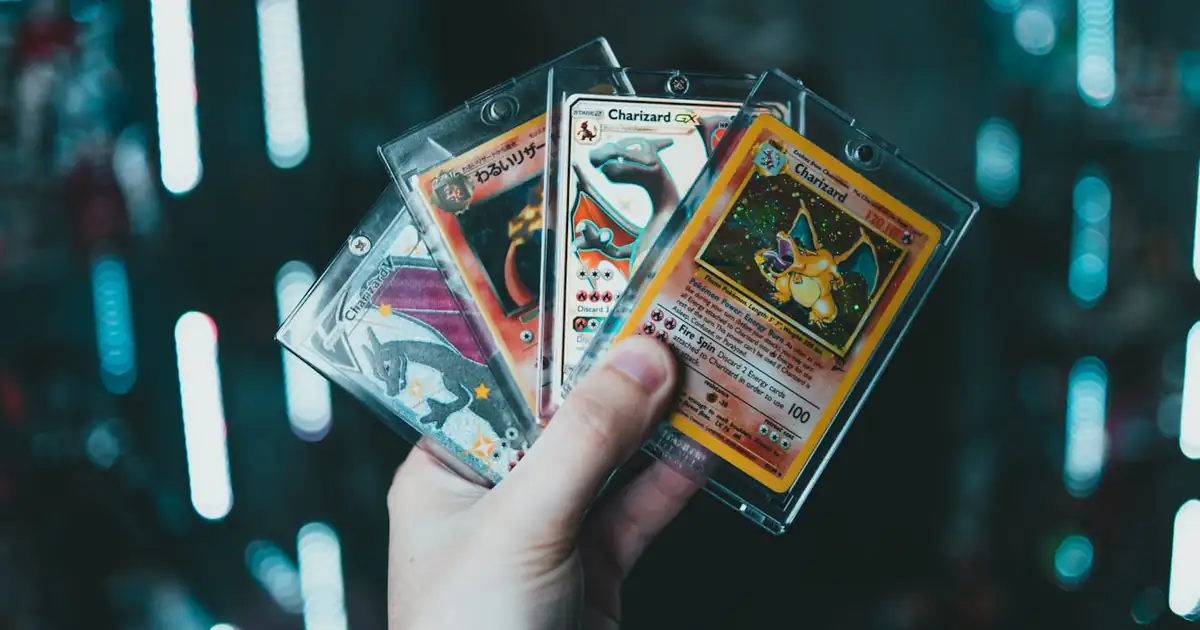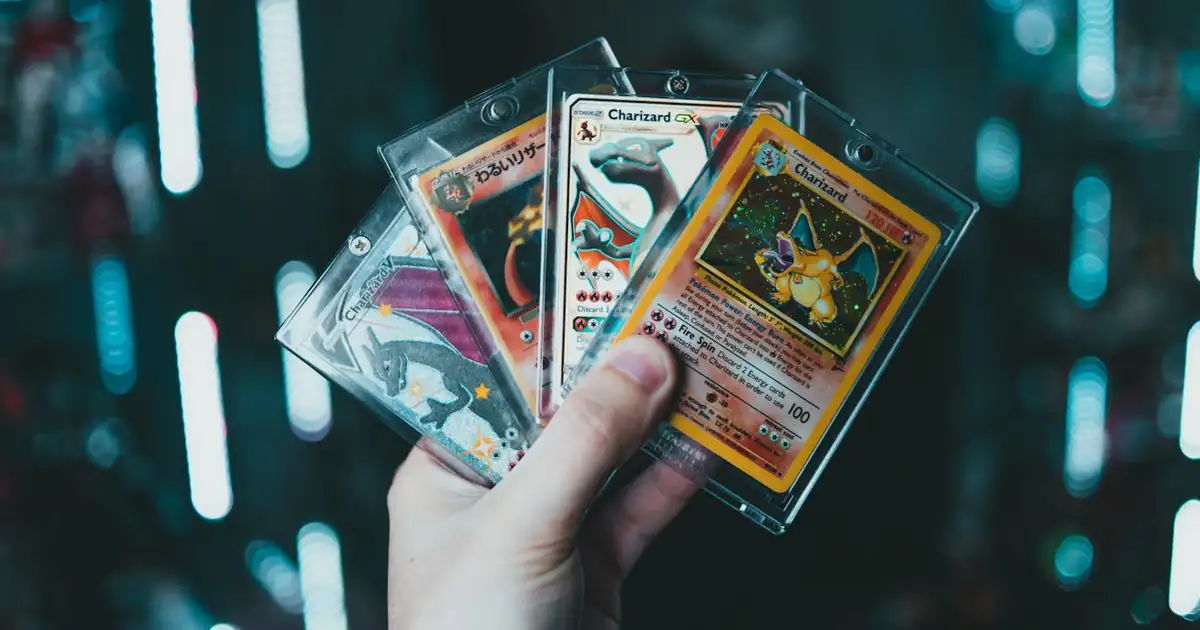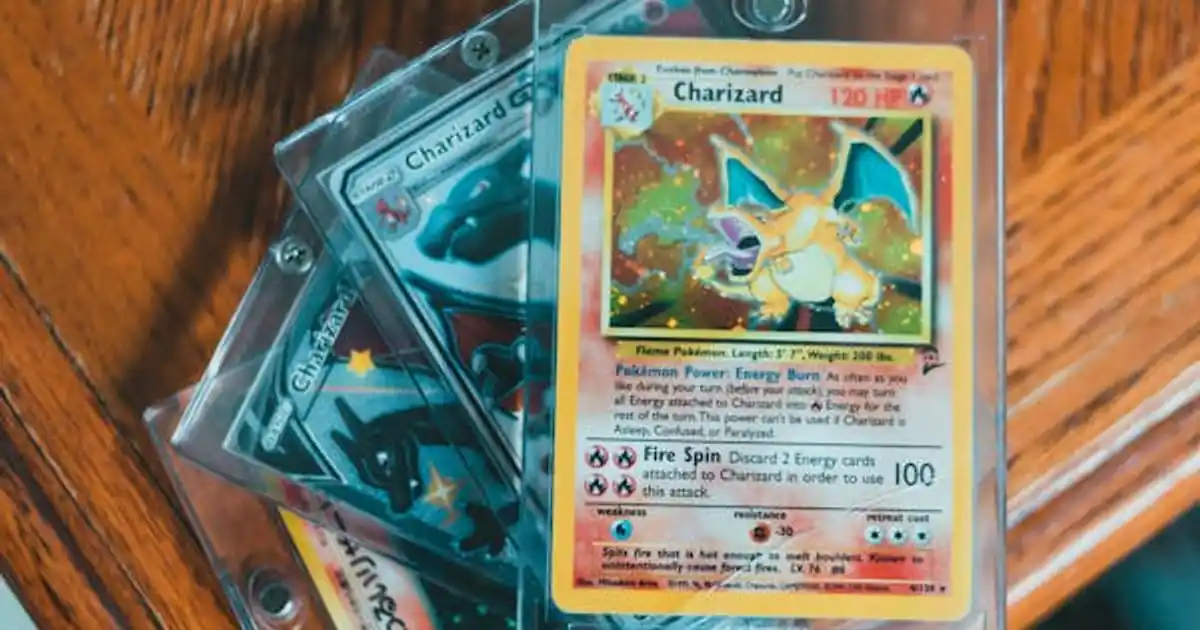
Pokémon Card Condition Guide: Near Mint to Damaged
Near Mint, Lightly Played, Moderately Played, Heavily Played, Damaged: what each Pokémon card condition allows, what it costs you, and a 60-second check.
Two copies of the same card, same set, same number, and a price difference of five times or more. Nothing about the card changed except how it was handled. Pokémon card condition is the multiplier sitting on top of every price you look up, and most people apply it in their own favour without noticing. Here's the five-tier scale sellers use, what each tier allows, roughly what each step down costs you, a sixty-second routine for reading your own card honestly, and how the raw tiers line up against PSA numbers.
The five conditions
The scale nearly everyone uses is the one TCGplayer built its marketplace around: Near Mint, Lightly Played, Moderately Played, Heavily Played, Damaged. The names are self-explanatory. The boundaries aren't.
Near Mint means minimal wear. A slight edge nick or a hint of whitening on one corner can still pass, but the surface should be clean, the corners crisp, and there's no bend or crease anywhere. Near Mint isn't "perfect", which is the part people get wrong. It's the default price you see quoted.
Lightly Played is wear you have to look for. Light whitening on a couple of corners or edges, faint surface scratches that only show under angled light, a bit of scuffing on the holo. No creases. From arm's length it looks fine.
Moderately Played is wear you can see without trying: obvious edge and corner whitening, visible scratching, and a bend or light crease is allowed at this tier. Most cards that spent a few years in a deck or a shoebox land here.
Heavily Played is rough but intact. Rounded and whitened corners, deep scratches, real creases, dirt, fading. Still one whole card, which is the line between this and the tier below.
Damaged means structural problems: tears, hard folds, water damage, writing, missing surface. Worth listing only when the card itself is worth something, because the buyer is paying for the fact that a copy exists at all.
What each step costs you
No fixed formula exists, and every card and every buyer differs, but these rules of thumb are close enough to price by. They're expressed as a share of the Near Mint price.
| Condition | Typical share of the NM price | What it usually allows |
|---|---|---|
| Near Mint | 100% | A tiny nick or speck of whitening, clean surface, flat card |
| Lightly Played | 80–90% | Light corner or edge whitening, faint scratches under angled light |
| Moderately Played | 50–70% | Obvious whitening, visible scuffs, a bend or light crease |
| Heavily Played | 30–50% | Heavy wear, deep scratches, creases, still intact |
| Damaged | 10–30% | Tears, folds, water damage, writing |
The gaps widen as the card gets more valuable, because the Near Mint buyers are the ones paying the premium. On a bulk rare nobody cares much. On a Charizard the NM-to-LP drop is real money. Marketplaces also price each tier from actual sales, so you can usually read the LP and MP numbers straight off the listing page rather than guessing; fall back on the percentages when the tiers are thin.
Nobody means the same thing by "Near Mint"
Here's the catch with a vocabulary everyone shares. Sellers grade optimistically. Buyers grade harshly, especially after they've paid. And graders don't use the words at all — they use a number, and Near Mint is the floor of the range that makes money rather than the ceiling.
So: "Near Mint" in a listing from a private seller means "I didn't see anything wrong", and you should assume Lightly Played until the photos say otherwise. PriceCharting's ungraded price pools sales across conditions and tends to sit under a strict NM figure. And an honestly Near Mint card is not automatically a PSA 10. Most aren't. That gap is what costs people grading fees.
The 60-second check
Do this under a desk lamp rather than the ceiling light, and treat the back as carefully as the front.
- Surface. Tilt the card slowly and watch the reflection travel across it. Scratches, print lines, holo scuffs and fingerprints show up as interruptions in that reflection. Straight-on they're invisible.
- Corners. All four, both sides. Sharp and coloured, or soft and white? One soft corner is the difference between NM and LP.
- Edges. Run a fingernail lightly along each one and look at the border. Edge whitening shows first on the back, against the blue.
- Bends and creases. Lay the card flat and look across it at eye level. Then angle it under the lamp: a crease catches the light in a line that doesn't move as you tilt.
- Back. Repeat the surface tilt. A card is only as good as its worse side.
Be honest at every step. The card wants to be Near Mint and so do you, which is exactly why you do this before you look up the price rather than after.
Condition versus grading
The raw tiers and the grading scale overlap without lining up. Roughly:
| PSA grade | Label | Roughly what it needs |
|---|---|---|
| 10 | Gem Mint | Essentially flawless under magnification, sharp corners, clean surface, front centering around 55/45 or better |
| 9 | Mint | One very minor flaw, such as a speck of whitening or slightly off centering |
| 8 | Near Mint–Mint | A couple of small flaws on close inspection, like light corner wear or a faint print line |
| 7 | Near Mint | Small flaws you can find without magnification |
A card that honestly passes as Near Mint raw usually lands between a 7 and a 9. A 10 has to be better than Near Mint. Lightly Played tends to map to the 5 and 6 range, and anything below that rarely justifies the fee unless the card is vintage and expensive. PSA's grading standards are the reference; the worth grading checklist covers the money side, and the CGC vs PSA vs Beckett comparison covers who to send it to.
Where condition bites hardest
Vintage, obviously. A Base Set holo that's genuinely Near Mint is rare, because these cards were played with by children in 1999. The NM premium is enormous and most surviving copies sit at LP. That's also the argument for buying vintage in LP: you're paying for the card instead of for the scarcity of its condition.
Modern chase cards are the sneakier case. Textured full arts and special illustration rares, like the Umbreon ex from Prismatic Evolutions or the Pikachu ex from Surging Sparks, pick up surface scratches from the pack and from sleeving. A card that's LP straight out of a booster has already lost a chunk before anyone touched it.
What Scryda does
Scryda reads the card from a photo and scores the four factors a grader looks at, centering, surface, corners and edges, into a PSA-equivalent estimate, then attaches the current market price so condition and value land in the same place. It's a screen, not a verdict. It catches the whitening you'd rather not see and the centering you eyeballed wrong. The Pokémon scanner page has the set coverage, or check a card's value directly if a number is all you need.
Frequently asked questions
Is a card straight out of the pack automatically Near Mint? Usually, but not always. Print lines, factory scratches on the holo, edge chipping from the cut and bad centering all happen before a card is ever touched. Most pack-fresh cards are Near Mint. Far fewer are gem mint.
What's the difference between Lightly Played and Moderately Played? Visibility. Lightly Played wear needs angled light or a close look to find, while Moderately Played wear is obvious at a glance. A bend or a light crease usually pushes a card to MP no matter how clean the rest of it is.
Does a crease make a Pokémon card Damaged? Not by itself. A light crease that hasn't broken the surface is Moderately or Heavily Played depending on everything else. A hard fold, a crease that has split the surface layer, or a tear is Damaged.
Is it worth selling Heavily Played cards? Only if the card is worth something to begin with. A Heavily Played copy of a card people want still sells, typically for a third to half of the Near Mint price. For bulk, the listing effort costs more than the cards return.
Share this article
Mentioned in this article
Sets
Look up what a card is worth
Every set, every card, with the market price on each one — free and no sign-up.
Related articles