How Much Is My Card Collection Worth?
Inherited a box of cards or rediscovered your childhood binder? Here's how to actually value a trading card collection without guessing or getting lowballed.
It's one of the most common questions in the hobby, and it usually arrives one of two ways: someone inherits a relative's old cards, or someone digs out the binder they filled as a kid and wonders if they're sitting on a fortune. Either way the real question underneath is "do I have anything good here, and how would I even know?"
The honest answer is that valuing a collection takes a bit of method, but not much. Here's how to do it properly, and how to avoid the two mistakes that cost people the most money.
First, reset your expectations
Before any numbers, the reality check that saves people heartbreak: most cards are worth very little, and value is wildly concentrated.
A typical large collection follows the same pattern almost every time. The vast majority of cards — commons, base reverse-holos, played bulk — are worth pennies each. Then a small handful, often fewer than ten cards, carry nearly all the value. A 2,000-card collection might be "worth" $600, where $550 of that lives in six cards and the other 1,994 add up to $50.
This matters because it tells you where to spend your effort. You don't need to carefully price 2,000 cards. You need to find the six and price those right. Everything else is bulk. Internalize that and the whole job gets smaller.
Step 1: Sort the obvious bulk out
Pull out everything that's clearly common first. Matte, non-foil, beat-up cards from recent sets are bulk — set them aside without looking anything up. You're not pricing these individually; bulk sells by the hundred or the pound, not the card.
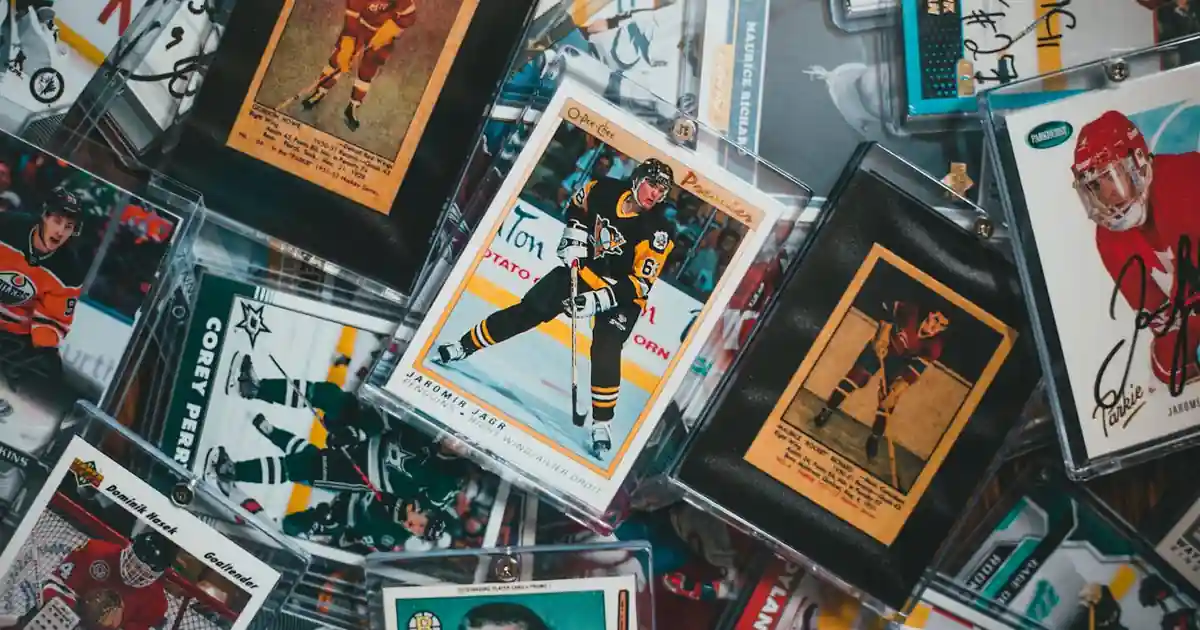
What stays on the table for a closer look: anything foil or holographic, anything old (check the date or set symbol — pre-2010 gets attention regardless of how it looks), anything with special art or texture, and any card you simply recognize as a chase card. This is your candidate pile, and it's almost always far smaller than people expect. For a TCG-by-TCG sense of what "old and good" looks like, the vintage Pokémon guide and Yu-Gi-Oh! cards worth money are good calibration.
Step 2: Price each candidate by its exact version
Here's mistake number one, the expensive one: pricing by card name instead of exact version.
The same character can exist in dozens of printings — different sets, rarities, first vs. unlimited edition, normal vs. reverse holo, English vs. Japanese — and they can differ in price by 50x or more. "Charizard" isn't a price. "Base Set first-edition shadowless Charizard, near mint" is a price. To value a card you need the set, the print/edition, and the condition, all three.
For each candidate, find the matching sold listings — sold, not asking — on a marketplace like TCGPlayer or eBay's sold filter, or Cardmarket in Europe. What sellers want is fiction; what cards sold for is the market. Match the exact version and condition, and use the recent sold range, not the one optimistic outlier.
Step 3: Be honest about condition
Mistake number two: valuing every card at near-mint from memory. Condition is a multiplier, and on valuable cards it's a brutal one — a heavily played copy of a card can be worth a fraction of a near-mint one.
Look at each candidate honestly under good light: surface scratches, corner wear, edge whitening, centering. A card you remember as "perfect" from your childhood has usually lived a harder life than your memory admits. The card conditions guide covers how to grade NM through DMG, and for genuinely high-end cards, whether to get them professionally graded is its own decision — a gem-mint slab can be worth multiples of the raw card.
Step 4: Add it up — and keep it current
Total your candidates at honest, version-and-condition-matched prices, add a modest figure for bulk, and you have a real number instead of a vibe. But there's a catch worth knowing: that number expires. Card prices move, sometimes fast, so a valuation you do today is a snapshot. If you're not selling immediately, the figure you wrote down will drift.
This is exactly the manual-labor problem that makes people give up halfway. Going card by card through a candidate pile, looking up each exact version and a current sold price, is slow — and then it goes stale. Scryda collapses the whole loop: scan a card and it identifies the set, the print, and estimates condition, then attaches a current market price and keeps it updated daily, with a 90-day history on every card. For a big inherited box that's the difference between a weekend of tab-switching and an afternoon — and the total stays honest after, instead of freezing the day you finished.
If you're valuing to sell
One more thing if the goal is selling, not curiosity: the number you calculated is the market value, not what you'll net. Marketplace fees, shipping, and the discount buyers expect all come off the top, and a dealer buying your whole collection at once will pay below piece-by-piece prices for the convenience of taking the bulk off your hands. That's not a scam, it's the spread — but knowing your real per-card numbers first is what stops it from becoming one. The how to sell guide covers getting the most out of a sale.
The short version
Don't try to price everything. Reset your expectations, sort the bulk out, and find the handful of cards that hold the value. Price those by exact version and honest condition using sold listings, not asking prices. Add it up, and remember the figure has a shelf life. Do that and you'll know what you've actually got — which is the only way to avoid both overestimating your childhood binder and getting lowballed on a real find.
Download Scryda free and start with your candidate pile — scan the cards that look old, foil, or special first, and let it tell you which ones actually carry the weight.
Frequently asked questions
How do I find out what my card collection is worth? Sort out the obvious bulk, identify the small handful of foil, old, or special cards that hold most of the value, then price each by its exact set, print, and condition using recent sold listings — not asking prices. Most collections concentrate nearly all their value in under ten cards.
Why is the same card worth wildly different amounts? Because "the same card" usually isn't. Set, edition (first vs. unlimited), rarity, holo type, language, and condition all change the price, often by 50x or more. You have to value the exact version, not the card name.
Should I use asking prices or sold prices? Sold prices. What sellers list cards for is wishful; what cards actually sold for is the market. Use the recent sold range and ignore optimistic outliers.
Will I get the full value if I sell? No — marketplace fees, shipping, and buyer expectations come off the top, and a dealer buying the whole lot at once pays below piece-by-piece prices for the convenience. Knowing your real per-card values first is what keeps a fair offer from looking like a lowball.
Share this article
Browse the card catalogue
Full card lists and live market prices, free and with no sign-up.
Related articles