TCG Card Conditions Explained: NM to DMG
Near Mint, Lightly Played, Heavily Played — card condition affects value more than most collectors realize. Here's what each grade actually means.
Card condition is one of the most important factors in TCG pricing, and one of the most misunderstood. A lot of collectors describe their cards as Near Mint when they're not. A lot of buyers receive cards in worse condition than described. The gap between what sellers think they have and what buyers see is the source of most disputes in card selling.
Here's what each condition grade actually means, how much each step down costs you in price, and how to assess your own cards honestly.
The standard condition grades
The TCG industry uses five conditions, from best to worst:
Near Mint (NM) is the standard for cards that look essentially new. A Near Mint card has no visible edge wear, no scratches on the surface, clean corners with no whitening, and no print lines or factory defects. Cards pulled fresh from a pack and immediately sleeved are Near Mint. Note: NM doesn't mean perfect — minor factory-level imperfections (very slight print offset, a tiny edge nick from the factory cut) are acceptable in NM, but anything you can notice at arm's length is not.
Lightly Played (LP) means the card shows minor wear. Some slight whitening on the corners, very light scratching on the surface under direct light, or minor edge wear. The card still looks clean at a glance but shows signs of handling. A card that was played unsleeved for a couple of games and then put away is usually LP.
Moderately Played (MP) is noticeable wear. Corner whitening that's visible without direct light, visible surface scratches, border wear, or a combination of minor issues across the card. Most played cards from a few years of casual use end up here. MP cards look well-used.
Heavily Played (HP) is significant wear that affects the card's appearance. Heavy corner rounding, deep scratches, creases that don't affect structural integrity but are clearly visible, heavy border wear. HP cards are usually still structurally sound but look rough.
Damaged (DMG) is reserved for cards that have structural problems: actual tears, bends that crease the card permanently, water damage, writing on the card, or other damage that affects the card itself rather than just its surface. DMG cards are typically not worth selling individually unless they're extremely rare.
How much condition affects price
The price difference between NM and LP is typically 10–20% for common cards and 20–30% for high-value cards. The difference between NM and MP is 40–60%. The difference between NM and HP can be 60–80%.
On a $100 card: NM is $100. LP is $75–90. MP is $40–60. HP is $20–40. Same card, different condition, wildly different value.
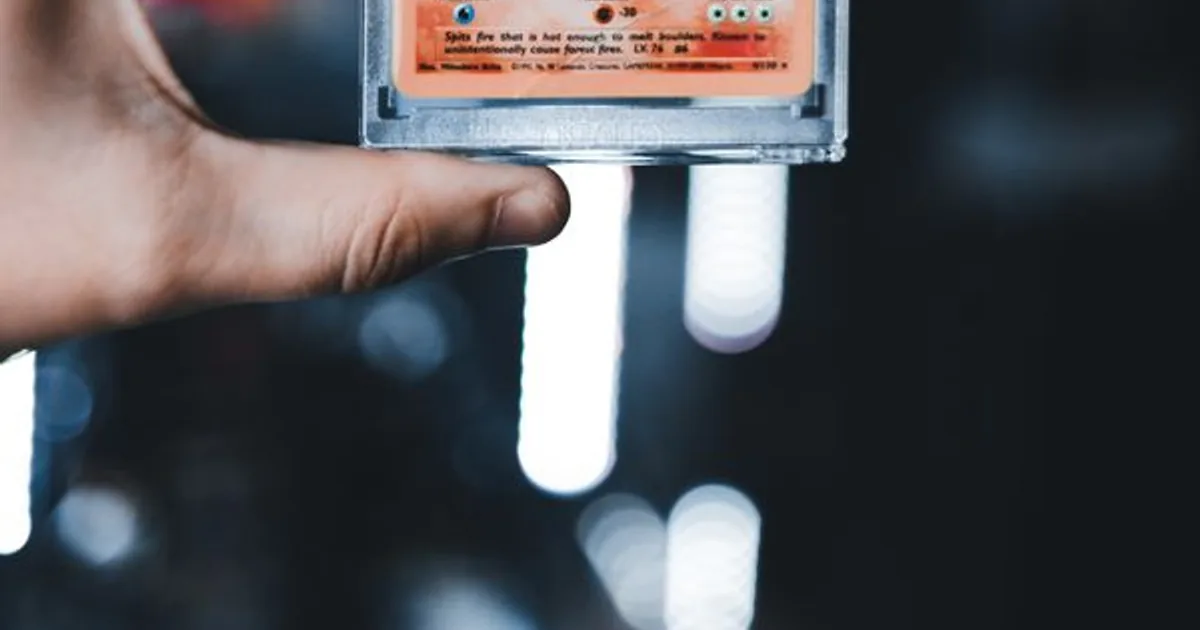
On a $1,000 card, those percentages represent real money. A 1st Edition Base Set Charizard graded PSA 10 (near mint-mint) sells for substantially more than the same card in PSA 7 (near mint). The difference between grades at the top of the scale is tens of thousands of dollars for the most valuable vintage cards.
This is why condition honesty matters so much in trades. Check the trade tips article — condition-adjusted pricing is one of the most important habits in avoiding bad trades.
How to assess condition accurately
The naked-eye test at arm's length is not enough. To assess a card properly:
Hold it under direct light — a desk lamp angled to create surface reflection works well. This shows scratches and print lines that are invisible in normal viewing. Cards that look flawless in photos often have visible surface wear under direct light.
Check the corners under the same direct light. Corner whitening from edge wear shows up most clearly when you angle the card toward the light source rather than straight-on.
Look at the back of the card. Scratches and whitening are often more visible on the back because the lighter border makes them easier to see. If the back has significant wear, the card is not Near Mint regardless of how the front looks.
Check centering. This doesn't affect condition grade but does affect professional grades — cards with noticeably unequal borders won't hit PSA 10 even if the surface is perfect.
Condition vs professional grades
The NM/LP/MP/HP/DMG scale is a community standard used in buying and selling. Professional grading companies use a numeric scale from 1–10 (PSA, CGC, Beckett) that's more granular.
PSA 10 (Gem Mint) is stricter than Near Mint — it requires near-perfect centering, no surface scratches visible under magnification, and pristine corners. Most cards pulled fresh from packs don't hit PSA 10.
PSA 9 (Mint) is roughly equivalent to Near Mint with slightly tighter centering requirements. Most carefully-handled NM cards land PSA 9 when graded.
PSA 7–8 corresponds roughly to LP-NM range. Below PSA 7 maps to MP and worse.
The PSA grading guide covers the full scale in detail. For most buying and selling, the community condition grades are sufficient — professional grades become relevant when you're dealing with cards worth $50+ or when authentication matters. See the CGC vs PSA comparison for how the main grading companies differ.
Scryda's AI condition estimation gives you a grade range before you decide whether a card is worth a formal submission. Check the Pokémon page or MTG page for what the scanner covers.
The biggest condition mistake
Overgrading. Most people selling cards call them Near Mint because that's what they want them to be, not because they've assessed them carefully. LP gets called NM. MP gets called LP.
The result: buyers receive cards below expectations, leave negative feedback, request returns. If you're selling cards, assess them under direct light, grade them honestly, and you'll have far fewer disputes — and repeat buyers who trust your listings.
When buying, always ask for photos under direct light for anything over $20. A seller who won't provide them is a red flag.
FAQ
What does NM/M mean on TCGPlayer? "NM/M" stands for Near Mint / Mint — TCGPlayer uses this as its top condition tier, combining the two. It corresponds to what other platforms call Near Mint: cards that are essentially new with no visible wear.
Is a card pulled fresh from a pack always Near Mint? Not always. Factory defects — slight miscuts, minor print lines, edge nicks from the factory cutting process — can affect new cards before they're even played. A card with a noticeable print defect is technically LP even if it was never touched.
Does condition matter less for bulk cards? Yes. For cards under $0.50, condition rarely affects the price meaningfully. Condition starts to matter at $2–5 and becomes very significant above $20. For anything over $100, condition is one of the most important price factors.
Share this article
Browse the card catalogue
Full card lists and live market prices, free and with no sign-up.
Related articles